
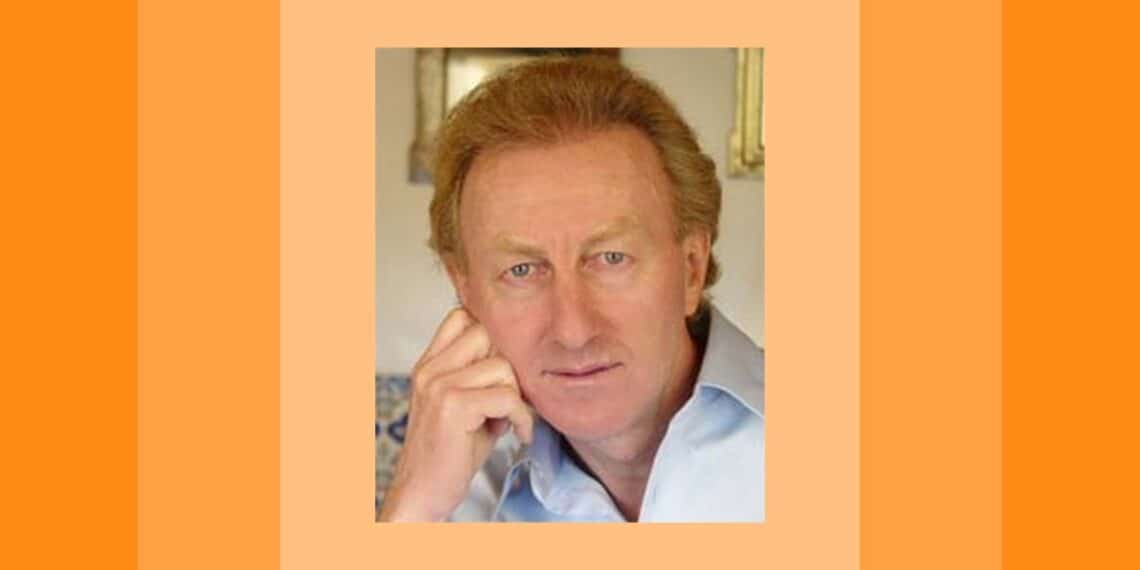
Dr. B – Dr. Luc, welcome to the Hpathy Hot-Seat. You are the homeopath of the month for Homeopathy for Everyone, world’s leading homeopathy e-journal and I would like to welcome you on behalf of the whole Hpathy Team and the homeopathic community that is part of the Hpathy family.
Luc, can you please tell us how your journey into the world of homeopathy began?
Dr. Luc – My journey in alternative medicine began almost immediately after graduating from medical school in Gent, Belgium in 1971. Coming out of school, I replaced, to earn some money, a physician going on vacation for 14 days. The work was so boring and fruitless that I immediately went to school in Amsterdam, Holland, the Dutch Doctors’ Acupuncture Association, where besides TCM (Traditional Chinese Medicine) I was first introduced to Homeopathy. At the same time I went to Paris, France to follow a similar school. I have never stopped learning since then.
Dr. B – When you started out with homeopathy 30-35 years ago, homeopathy was struggling very hard for survival in Europe and US. What made you chose it above anything else as a career? Were the initial years difficult as a homeopath? What were the most difficult aspects of being a homeopath during those times? Can you share with us what was the state of homeopathy in the western hemisphere when you started your career as a homeopath?
Dr. Luc – When I started my career at that time, any alternative branch was largely unknown and very little practiced as any form of medicine (holistic included) had to be practiced by a licensed MD. Since not much money was involved, few of my colleagues were interested. I chose TCM and Homeopathy because both sciences have many things in common and they appealed to me because of their common sense approach: the individualization and the single remedy prescribing were two aspects that attracted me. Was it difficult to start? The amount of patients from the beginning on was staggering in view of the results I had. I was still very naive at that point and probably often was Dr. Lucky but I studied hard everyday besides practicing and with that, each day was a better day. The only difficulty I had was the jealousy of my colleagues who went so far as to refuse to treat their and my patients if they continued consulting me. That never stopped my patient load as results speak above all.
Dr. B – You first trained in TCM and then moved on to Homeopathy? Was it a natural transition or was it difficult for you to relate the laws of homeopathy with your knowledge of conventional medicine and TCM?
Dr. Luc – As I mentioned before, TCM and Homeopathy have many things in common: the natural cure, working as an energetic medicine with the Qi or Vital Force, observations of exteriorization, emotions linked to pathology in organs, balance between organs, etc. It is a natural marriage. This year in the US I will teach my advanced students how to incorporate many practical clinical aspects of TCM into finding the homeopathic simillimum. They are very enthusiastic about this new possibility which makes them understand the patient much better.
Dr. B – Homeopaths in general do not recommend their patients to undergo any energy-based treatment during homeopathic treatment. It is considered that homeopathic medicine works on an energy plane and any other such treatment may interfere with the homeopathic treatment. What is your opinion on this? I am asking you because you are trained in TCM and have used this modality successfully with homeopathy. Which treatment modalities are compatible with homeopathic treatment in your opinion?
Dr. Luc – Hahnemann, himself, recommends “allopathic intervention” in dire acute need like drowning, poisoning, etc. to restore vital signs. Also 10% of surgical operations ARE necessary, those of obstruction and stenosis…as to have more time to find the simillimum. Regarding employing other modalities WITH homeopathy one must apply common sense. When the patient comes to the office and is on many allopathic meds, we must never change anything of these meds the first visit. Rather prescribe the simillimum (yes it still works in spite of allopathic suppression) and only reduce/eliminate allopathic meds when the remedy “takes”. I also never recommend starting another modality with the initial homeopathic treatment, as we want only ONE change to start homeopathic treatment. But when they already undergo TCM treatment, I do not change anything either. TCM and vitamin therapy and Ayurvedic system work well with homeopathy.
Dr. B – You have written more than a dozen books on homeopathy, acupuncture and holistic health? What drives you as an author? Which of your own work is your favorite and why?
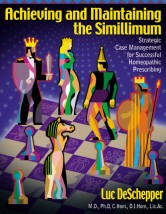 Dr. Luc – I always say to myself, “This is going to be my last book,” but now I realize I will never stop writing as I study daily homeopathy, philosophy, psychology, alchemy, TCM, etc. and want to integrate many practical modalities into homeopathy, always with the goal of understanding the patient better and therefore resolving his problem easier. Certainly, “Achieving the Simillimum,” which I wrote on demand of my own students is my favorite work as it fills the gap of the most neglected and difficult part of homeopathy: What to do on the second and subsequent visits? I sincerely hope it will unite all homeopaths to finally practice with the more advanced Hahnemannian methods.
Dr. B – Which other works by contemporary homeopaths do you find most readable and thought provoking?
Dr. Luc – Unfortunately, I have found very little contemporary work that has caught my attention. Too many people claim they invented something new but when one reads through their work carefully, either Hahnemann already did it or the newest “discoveries” are nothing but sidestepping homeopathic principles, confusing students and patients alike. Giving a “new name” to your kind of homeopathy does not mean you invented something new, especially as I see that such practitioners remain stubbornly 4th edition Organon prescribers. You know what I hear from sincere students all over the world? Why are there so many different opinions among homeopaths? Indeed before embarking on “new” discoveries, homeopaths would do well to study the Organon and Chronic Diseases side by side carefully. Much confusion and battle between homeopaths would be saved. And to those who dismiss the Organon as an old dusty book and “it is not the bible,” I have the questions: “Tell me what aphorism is wrong in the Organon? And, “Who in these modern times has found anything new to write in a 7th edition?” There are many obstacles to the cure, but the homeopath is often the first one. And we don’t have to wait for allopaths to destroy homeopathy as Pseudo-homeopaths do the work much better.
Dr. B – In your seminar at Jaipur, you were saying that most homeopaths still practice according to the 4th edition of Organon. Why do you think homeopaths from across the world have not been able to come out of the teachings of the 4th edition of Organon and that of Kent?
Dr. Luc – That is a very good question and we should ask these people. There is NO plausible reason for hanging on stubbornly to the 4th edition of the Organon. Why would you want to cause unwarranted similar aggravations in your patients? Why would you delay the cure instead of achieving it in half of the time (§246)? Why would one follow Hahnemann’s “barbaric methods” (his words) instead of achieving a gentle and speedy cure (§2)? Much blame has to be given to Kent who should have known the 5th edition (1833) but for some reason that I could never find, only used high potencies (first change of the 4th edition) but never applied the two other major and more important changes of the 5th edition: the water solutions and the repetition in judicially selected intervals of the simillimum WHILE the patient is improving. All too often I hear from other practitioners: “I am doing the water solutions,” and see that they do it in their own way resembling the typical allopathic way: “Take a dose everyday and come back to me when the remedy solution bottle (RSB) is empty! NOTHING in homeopathy is mechanical: those people sin against “individuality” (see §281)one of our homeopathic principles. I have “donated” two of my important books to Africa and India in the hope that it will stimulate them to follow Hahnemann’s advanced methods.
Dr. B – You have traveled across the world – from Africa to Asia, from Europe to US. Where have you seen the maximum growth of homeopathy as a system of medicine and where do you see the most potential?
Dr. Luc – In my opinion India has the greatest possibility to flourish since homeopathy is accepted by so many people, there are many schools and there is support from allopathy and the government. But they only will succeed IF they raise the quality of their teaching. Similar to S. Africa, they have 5 to 6 year full time schools, but in both continents, I found the quality of their allopathic studies much better than their homeopathic ones. India has good things going for it and I like how the students get in contact and serve the poor people with their mobile units. But what is the purpose of seeing 100 patients a day, if management is not understood? It is a universal problem, not an Indian one, but at least India has the infrastructure to make it better.
Dr. B – You have worked hard to introduce homeopathy to nascent areas like Kenya and China. What is your vision about the growth and spread of homeopathy in such areas? We need many more people and much more resources to accomplish on a global level what you have been trying to do alone. Do you think that there should be an international umbrella organization of homeopathy to take up this work?
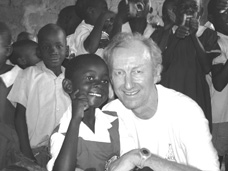 Dr. Luc – I wish there were some of my esteemed colleagues and teachers coming with me on such travels, but so far I have had no takers. They are probably too busy making money. Of course homeopathy worldwide would profit from successful exposure in case of tragedies. We need a structure like “Doctors without Borders,” but our equivalent “Homeopaths Without Borders” is only in its infancy stage. Lack of money is of course a great reason and I wish that those philanthropists who give millions of dollars to vaccinations, and now what I read “to teach nurses in India in advanced (sic) methods of treating AIDS” (What is that suppose to mean?) would give to Homeopathy. I hope to see it still in my time that homeopaths do unite in such a way and that they do receive the recognition and financial support from governments.
Dr. B – You have vast experience as a clinician. What were the most difficult aspects of clinical practice that you had to face? What are the areas that you still consider difficult to manage with homeopathy or where the use of conventional medicine is essential?
Dr. Luc – There is no doubt that the homeopathic practice is more difficult in our times due to the advanced and longtime allopathic suppression, legalities, government laws and ignorance of people. However this is NOT an excuse for flaunting all the homeopathic laws and to become “creative”, bringing discredit to homeopathy and undue suffering to the patient. So-called “more complex modern diseases” are only an excuse used by “innovators” to not follow our logical guidelines. More than ever they need to be followed in order to be successful. But I think that the physical suffering of the modern man is surpassed by his “psychic” and spiritual suffering. Modern man has lost sight of a real “meaning of life,” as he pursues the constant acquisition of worldly goods, while damaging his soul. In order for us homeopaths to be successful in our times, we need to become as good psychologists as homeopaths. A course in psychology should be a MUST in most homeopathic colleges and, of course, §67 of the Organon tells you that there are allopathic indications where time must be saved while restoring the vital signs, not only to find the simillimum, but also the harder work of psychological insight and introspection. Operations are usually the last resort but ten percent of them are necessary! The good homeopath must recognize such indications!
Dr. B – You are the founder of the Renaissance Inst. Of Homeopathy. My understanding is that most of your students are related to health work in one way or another. What has been your experience in teaching people who come from conventional medicine background?
Dr. Luc – Indeed most of my students are licensed in another branch of medicine: MDs, vets, nurses, psychologists, TCM doctors, chiropractors, etc. It is a tribute to homeopathy that we can bring such a diverse group of practitioners together and make them practice in such uniform way and have all the same homeopathic results. The allopathic MDs have the most difficulties in achieving successful studies as they are shocked by the degree of difficulty of the homeopathic science.
Dr. B – What would be your advice to young homeopaths who have just started their clinical life?
Dr. Luc – My advice is simple: remain a student for the rest of your life! Drink from any good source of knowledge and NEVER accept unconditionally from anyone. No learned man stands above justified scrutiny and questioning. He should welcome these questions as they will stimulate him to become a better teacher. The young student should also know that he has chosen the most difficult medical modality which will require all his perseverance to succeed, but it will be worth it. Financial hardship will disappear under the grateful smile of your patients. Try to reach the patient not only through your head, but also through your heart. We have been given a treasure by Hahnemann. Let’s respectfully follow his lead and we will not be disappointed.
Dr. B – You have a vision – to see homeopathy as the primary system of medicine and conventional medicine or allopathy as the secondary or alternative system. When do you think we can see this vision come true and what will be the biggest hurdles in the way towards achieving that vision?
Dr. Luc – I indeed have this vision and it is my greatest wish since it would help us to secure the permanent and speedy cures we promise in §2. But we have enormous hurdles in the way allopathy conducts its business. This is a “business” about healing as pharmaceutical companies spend millions of dollars to pay lobbyists to influence our law makers. Universities accept millions of their money to conduct tests. How can this “cheap” homeopathy compete with them? That homeopathy is cheap is one of the major hurdles of its acceptance. “How can I make money?” is the first question of an interested business party. Unless a courageous politician or philanthropist backs homeopathy, it will always be attacked falsely as we have seen lately in the Lancet. There is nothing new under the sun and I predict these attacks will be continued as they ARE afraid of us as we are getting in their deep pockets every time we administer a homeopathic remedy. And then allopathy successfully uses the tool of fear to bring the patient in alignment with its destructive wishes. Since when is sowing fear a healing tool? Will it ever happen that homeopathy will become the primary care giver? I am not holding my breath!
Dr. B – You seem to favor Boenninghausen’s approach over that of Kent’s. Why is it so?
Dr. Luc – I teach five different methods to my students to find the simillimum and I favor no one method over the other. Depending on the case, one or more than one method can be chosen and be successful. The von Boenninghausen method is particularly attractive in that it deals first with the modalities of the patient, which are usually constant and easily remembered and expressed by the patient. The often difficult to find mental emotional symptoms are only used at the end to differentiate between close remedies. It is a method that should be taught worldwide, but again this is not done. As a student of psychology and especially C.G.Jung, I love the subjective symptoms.
Dr. B – Continuing with the previous question, what role do you think subjective symptoms, especially those on mental and emotional sphere, should play in a case? While Kent gives highest importance to them, the approach of Boger and Boenninghausen is more based on etiology, modalities, concomitants, sensation, location and mental/emotional changes in that order. Do you find both approaches contradictory? Where is the meeting point? Can people using different approaches arrive at the same remedy?
Dr. Luc – As mentioned before, the correct interpretation of the important subjective symptoms is often difficult and one should study psychology intensively to have a better understanding of the patient. Every homeopath should learn the homeopathic meaning of the numerous delusions we have in our Repertory (few do) and the difficult interpretation of dreams is another branch of homeopathy that should be examined as no homeopath has done so far. But all these approaches are “compatible,” and I often use all these “different screens” in front of me to confirm and find the simillimum. Since there is only one simillimum for each case (is that not the definition?) each method should and will come to the same remedy in a given case.
Dr. B – You have used LM potencies extensively and now very often use the split method given in the 5th edition. For the benefit of our student homeopathic readers, I request you to share your approach to homeopathic posology with us. What is the role of various scales and methods of administration of remedies, their efficacy, differences and your general approach towards potency selection?
Dr. Luc – Much is discussed in my book “Achieving the Simillimum.” In practice I came to use in chronic cases the 5th edition 6C split method for 70% and the LM method for 30% (and this regardless of mental/emotional or physical pathology), while I love the 5th edition split (200c or 1M) method for 100% of the acute cases. There are many cases for those who successfully practice with the LM method to find in the 5th edition. I think of the severe suppressed skin diseases where a gentle cure is almost impossible. Both methods undoubtedly provide us with a great range of adjustment to the nature of the patient, the nature of the disease and the nature of the remedy (§281). The topic covers too many pages to answer here in this issue.
May we never give up trying to become better homeopaths! And my question to the reader? Are you on a homeopathic remedy? How can you dish out remedies when you have failed to do your own introspective work and know that a remedy is waiting for you to correct your “imperfections!”
Dr. B – You nearly lost an eye in 1992 due to retinal hemorrhage. You chose to go with homeopathy at that time instead of conventional medicine. Considering the severity and urgency of the situation, was it a difficult decision to make? Can you please walk us through the whole episode – how the complaint occurred, what thoughts crept into your mind when the conventional doctors gave you a grim prognosis, how you decided to treat yourself or to take advice of another homeopath, and how you arrived at the simillimum? I think your case is going to inspire many homeopaths.
Dr. Luc – Losing eye sight to someone like myself who is active in sports and learning is the greatest of calamities that could ever happen to me. And when I suddenly lost my vision in one eye, I am not ashamed to say that I cried. Even more when the first ophthalmologist told me that I was going to go blind in both eyes. Upon recovering a day later from this “hearing bad news” I consulted an eminent professor in retinopathy in Los Angeles belonging to UCLA University. He diagnosed me correctly with retinal bleeding (cause unknown) and told me to take 14 days 80 mgs of cortisone! I know very well the horrible side effects of such drug. It took all my conviction and honesty to myself, in view of grave consequence that I could become blind, to do what any true homeopath should do; follow the true Laws of Healing of Homeopathy. I took the similimum and 1 month later I returned for the check up. The professor DID NOT ask me if I took the cortisone (of course I did not), took a retinogram and expressed his joy and amazement that everything was normal. I did not say anything but I know that I always will count on homeopathy to bring me through the most difficult times of my life. At the same time it was the opportunity for me to be introspective and to look into my shadow side as to find the cause and the similimum for this case in order to not only prevent a recurrence of such incident, but to improve as a human being.
Dr. B – You were born in 1946, and that makes you sixty! But you look incredibly young for your age. If you were a complete stranger, I would have guessed your age to be around 40-45. What is the secret of your good health? Any suggestions for our young homeopaths about how to be healthy themselves first?
Dr. Luc – The answer to this question is linked to the previous one, I truly believe that only two things in life are important: First you do in life what you like doing, not what someone else imposes on you because “it is a more decent profession.” Everyone, to the lowest profession, should be able to find a meaning in his life as everyone fills a role that someone else cannot fulfill. Second, hopefully you will find a partner who you will learn from and teach. These two happy events, rarely found, are the basis of happiness. Of course I never smoked, never drank alcohol or coffee, and my moto is, “A healthy body in a healthy mind.” So I always have been and still am a sports man: football, tennis, swimming, yoga, and ballroom dancing are part of my life style. Finding your passion in life is the key to health.
Dr. B – Thank you Dr. Luc for these insights and all the thoughts that you shared with us. It has been a pleasure to have you with us and I hope that Hpathy will continue to receive your support and encouragement in future too.


True altruism
Thank you Dr. B and also Thank you DR.Luc.You give us lot of information of Homeopathy.I would like to read books of DR.Luc specially ‘Achieving of Maintaining the Simillimum’.Thank you to give us great information.